
Fresh vs Frozen Embryo Transfer: Which Has Better Success?
Table of Contents
ToggleFresh vs frozen embryo transfer is one of the most common questions couples ask during IVF. After your eggs are collected and fertilised, the embryo can be placed in your uterus within a few days, or frozen and transferred in a later cycle. Both methods can lead to a healthy pregnancy. However, one may suit your body better than the other.
In this guide, Dr. Mamtha C.V explains fresh vs frozen embryo transfer in simple words: how each works, which has better success, and how doctors decide what is right for you.
Key Takeaways
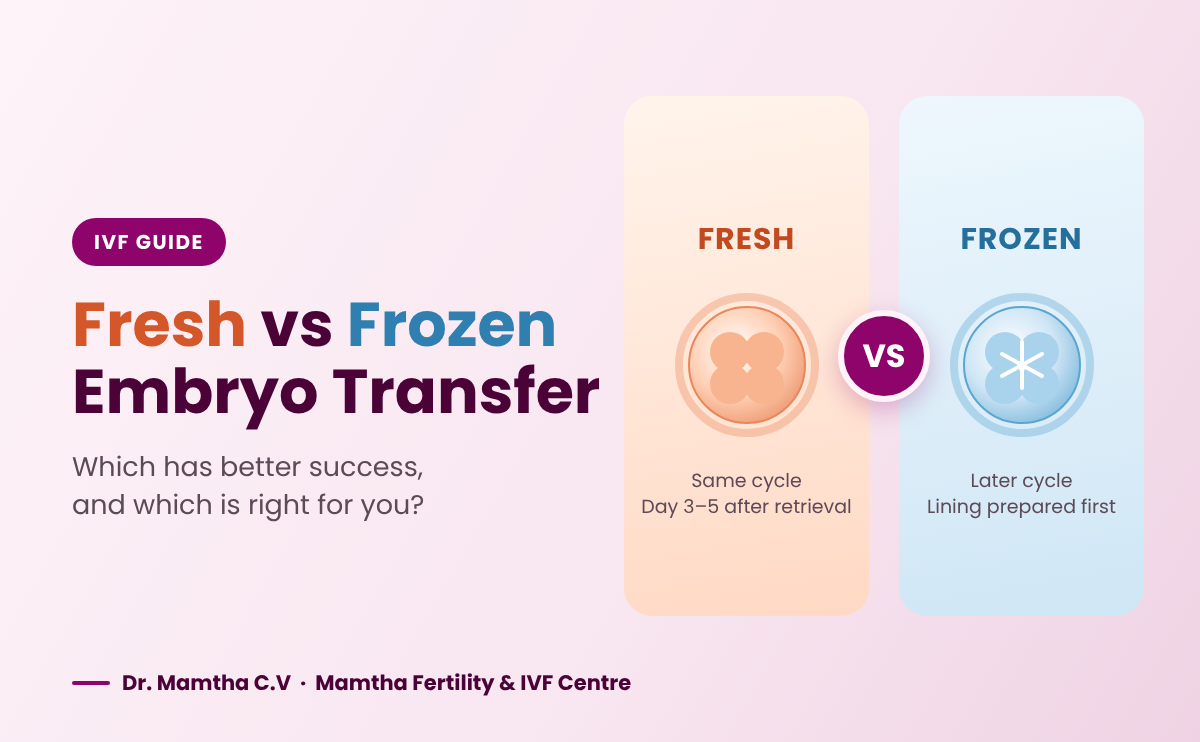
- A fresh embryo transfer happens 3 to 5 days after egg retrieval, in the same cycle.
- A frozen embryo transfer (FET) happens in a later cycle, after the body has recovered.
- For many women, success rates are similar in fresh vs frozen embryo transfer.
- FET is often preferred for women with PCOS, a high risk of OHSS, or when genetic testing is planned.
- Your age, embryo quality and uterine lining matter more than the method itself.
What Is a Fresh Embryo Transfer?
In a fresh embryo transfer, the embryo is placed in the uterus soon after egg retrieval, usually on day 3 or day 5. Everything happens in one IVF cycle, so there is no freezing or thawing.
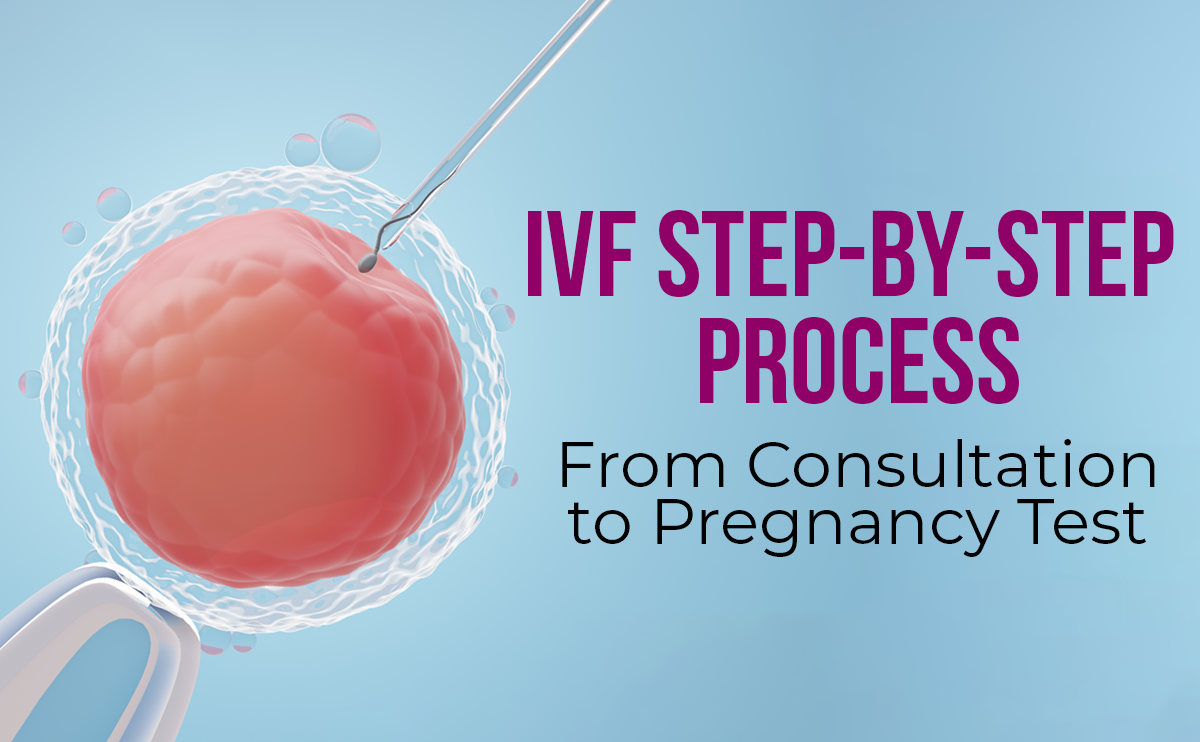
The fresh embryo transfer procedure is quick and painless. A thin, soft tube carries the embryo through the cervix into the uterus under ultrasound guidance. You can read every stage in our IVF process step by step guide.
What Is a Frozen Embryo Transfer (FET)?
The meaning of frozen embryo transfer is simple. Embryos created during IVF treatment are frozen using a fast method called vitrification. Later, often 1 to 2 months after retrieval, one embryo is thawed and placed in the uterus.
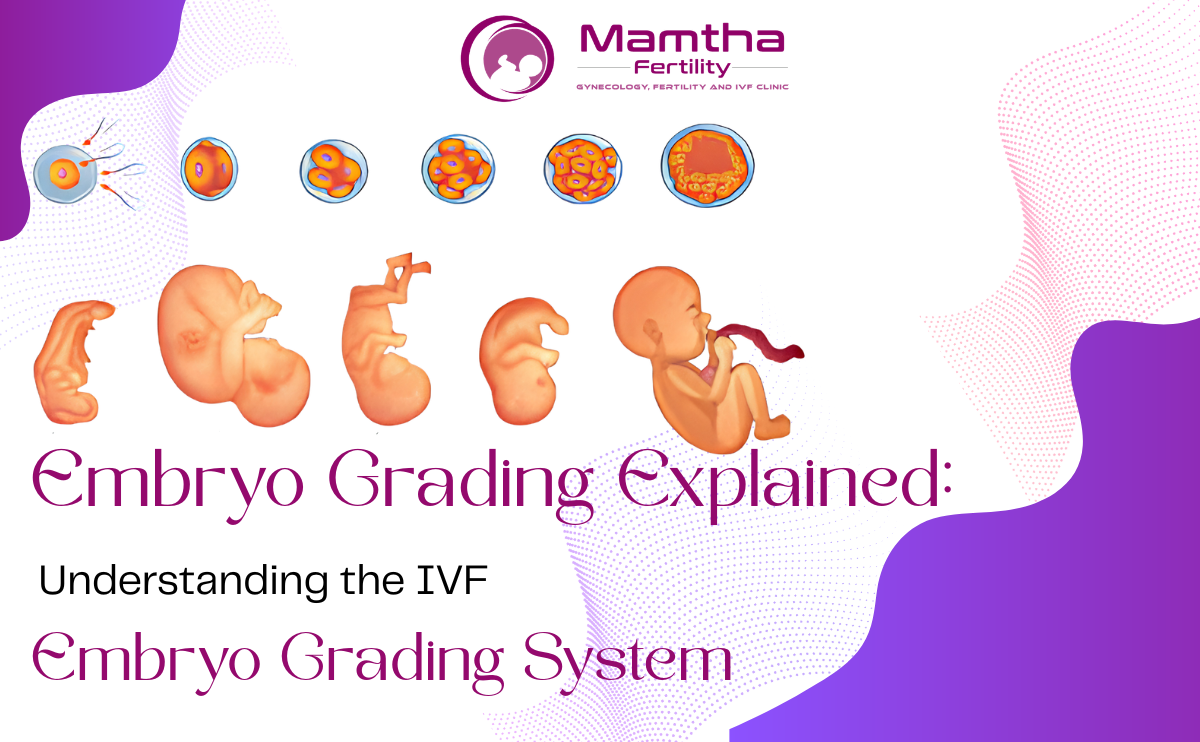
With modern vitrification, most good-quality embryos survive thawing well. Embryos are usually frozen at the blastocyst stage (day 5 or 6). To know how embryos are assessed, read embryo grading explained.
Fresh vs Frozen Embryo Transfer: Key Differences
The table below compares fresh vs frozen embryo transfer side by side.
| Factor | Fresh embryo transfer | Frozen embryo transfer |
|---|---|---|
| Timing | 3–5 days after egg retrieval | In a later cycle, usually 1–2 months later |
| Hormone levels | High, from stimulation injections | Closer to natural levels |
| Uterine lining | May be affected by high hormones | Prepared separately for transfer |
| OHSS risk | Higher in high responders | Much lower |
| Genetic testing (PGT) | Usually not possible | Possible, since embryos are frozen |
| Flexibility | Fixed timing | Transfer can be planned |
| Time to pregnancy test | Faster | A few weeks longer |
| Cost | Lower (no freezing or thawing) | Extra freezing, storage and preparation cost |
Fresh vs Frozen Embryo Transfer Success Rate
What Research Shows
Many large studies compare fresh vs frozen embryo transfer success rates. For women with a normal response to stimulation, overall live birth rates are often similar. However, women with PCOS or a high response to injections may do better with FET. For example, a large trial published in the New England Journal of Medicine found higher live birth rates with frozen embryos in women with PCOS.
So, is frozen embryo transfer more successful? Sometimes yes, but not for everyone. The frozen embryo transfer success rate depends on your situation, not only on the method.
Factors That Matter More Than the Method
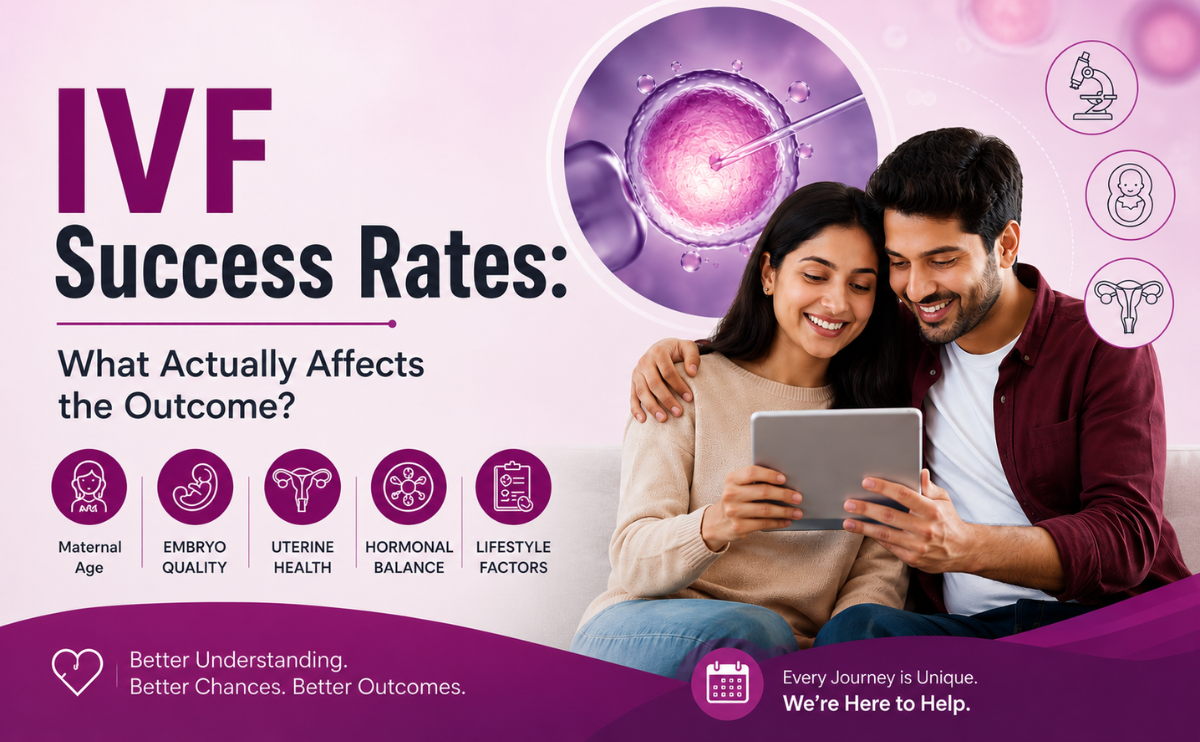
In fresh vs frozen embryo transfer, these factors often decide the result:
- Your age when the eggs were collected. Younger eggs give better embryos.
- Embryo quality. A good blastocyst has a higher chance of implanting.
- Uterine lining. A healthy, receptive lining helps the embryo attach.
- Overall health. Thyroid, weight and other conditions also play a role.
To learn more, read about the factors that affect IVF success rates.
Why Frozen Embryo Transfer Is Often Preferred
Many fertility centres now choose a “freeze-all” approach for certain patients. Here is why frozen embryo transfer is often better in these cases:
- Lower risk of OHSS. Freezing all embryos avoids pregnancy hormones in a cycle where the ovaries are already overstimulated. Women with PCOS benefit most. Read more on PCOS and fertility.
- A better-prepared uterus. Very high hormone levels can make the lining less receptive. FET allows the body to settle first.
- Genetic testing. If embryos need PGT, they must be frozen while results are awaited.
- Health reasons. Fever, infection or fluid in the uterus can delay a fresh transfer safely.
When a Fresh Embryo Transfer May Be the Better Choice
A fresh transfer can still be a good option. In fresh vs frozen embryo transfer decisions, doctors may suggest fresh when:
- Your response to injections was normal, with no OHSS risk
- Hormone levels and lining thickness are good on transfer day
- No genetic testing is planned
- You prefer a faster result and lower cost
Frozen Embryo Transfer Process and Timeline
The process for frozen embryo transfer focuses on preparing your uterus. There are two main types. Learn more about our frozen embryo transfer procedure in Bangalore.
Natural Cycle FET
In a natural frozen embryo transfer, your own ovulation is tracked with scans and blood tests. The embryo is transferred a few days after ovulation. Natural cycle FET suits women with regular periods.
Medicated (HRT) FET Cycle
In a medicated FET cycle, you take oestrogen tablets from day 2 or 3 of your period to build the lining. Once the lining is ready, progesterone is started. A day-5 blastocyst is then transferred on the planned day. The medicated FET protocol suits women with irregular periods or PCOS.
When Is Frozen Embryo Transfer Done After a Period?
In most cycles, the frozen embryo transfer happens around 2 to 3 weeks after your period starts. After egg retrieval, doctors usually wait at least one full cycle before the frozen embryo transfer.
Uterine Lining Thickness for FET
Most doctors look for a lining of at least 7 to 8 mm with a healthy pattern on ultrasound. If your lining stays thin, treatments such as endometrial rejuvenation may help.
Day of Frozen Embryo Transfer
On the day, the embryo is thawed and checked. The transfer takes about 10 to 15 minutes. It feels similar to a Pap smear, and no anaesthesia is needed. You can go home soon after.
| Stage | Frozen embryo transfer timeline |
|---|---|
| Start of cycle | Day 2–3 of period |
| Lining preparation | About 10–14 days |
| Progesterone support | Starts once lining is ready |
| Embryo transfer | Around day 17–21 of the cycle |
| Pregnancy blood test | About 10–12 days after transfer |
How to Prepare for a Frozen Embryo Transfer
Getting ready for frozen embryo transfer is mostly about following your plan carefully:
- Take your medicines on time and do not miss doses
- Eat balanced meals and drink enough water
- Keep stress low with light walks, rest and good sleep
- Avoid smoking, alcohol and excess caffeine
- Attend all scans so the timing is accurate
If a transfer has failed before, your doctor may check for hidden causes first. Read about the common reasons IVF fails to understand how to increase frozen embryo transfer success.
Fresh vs Frozen Embryo Transfer: Which Is Right for You?
There is no single best answer in fresh vs frozen embryo transfer. Your doctor will decide based on your body’s response and test results.
| Fresh may suit you if… | Frozen may suit you if… |
|---|---|
| You had a normal response to injections | You have PCOS or a high egg count |
| Your lining and hormones are ideal | You are at risk of OHSS |
| You want a quicker, lower-cost cycle | You need genetic testing of embryos |
| No health issues need time to settle | Your lining needs extra preparation |
Frozen Embryo Transfer at Mamtha Fertility, Hebbal
At Mamtha Fertility, Dr. Mamtha C.V studies your response, hormone levels and lining before advising on fresh vs frozen embryo transfer. Every plan is personalised for the best possible outcome. Explore our frozen embryo transfer treatment, or book a consultation to discuss your options.
Thinking about the future too? Read our guide on the egg freezing process to understand how freezing eggs differs from freezing embryos.
Frequently Asked Questions
Is frozen embryo transfer better than fresh?
Not always. For many women, results are similar. FET is often better for women with PCOS, a high OHSS risk, or embryos that need genetic testing.
Fresh or frozen embryo transfer: which is better for PCOS?
Frozen embryo transfer is usually preferred in PCOS. It lowers OHSS risk and, in research, has shown higher live birth rates for these women.
Is FET more successful than a fresh transfer?
It can be in some groups, but overall, fresh vs frozen embryo transfer results depend more on age, embryo quality and the uterine lining.
How long after egg retrieval is a frozen embryo transfer done?
Usually after at least one full menstrual cycle, so about 1 to 2 months after retrieval.
When is FET done after a period?
Most FETs happen around 2 to 3 weeks after the period starts, depending on whether a natural or medicated cycle is used.
What lining thickness is needed for FET?
Most doctors prefer a lining of at least 7 to 8 mm with a healthy pattern on ultrasound.
How can I increase my FET success?
Follow your medication plan, keep a healthy routine, manage stress, and treat any issues like thin lining or thyroid problems before the transfer.
Conclusion
Choosing between fresh vs frozen embryo transfer is not about which method is better for everyone. Instead, it is about which method suits your body. A fresh transfer is quicker, while a frozen transfer gives your body time to recover and your uterus time to prepare. Talk to your fertility specialist about fresh vs frozen embryo transfer, so your plan matches your health, your embryos and your goals.
Written and medically reviewed by Dr. Mamtha C.V, MBBS, DGO, Gynecologist and Reproductive Endocrinologist, Mamtha Fertility & IVF Centre, Hebbal, Bangalore.
Disclaimer: This article is for general awareness only and does not replace a medical consultation. Please consult a qualified fertility specialist for advice about your health.