
IVF Success Rates: What Actually Affects the Outcome?

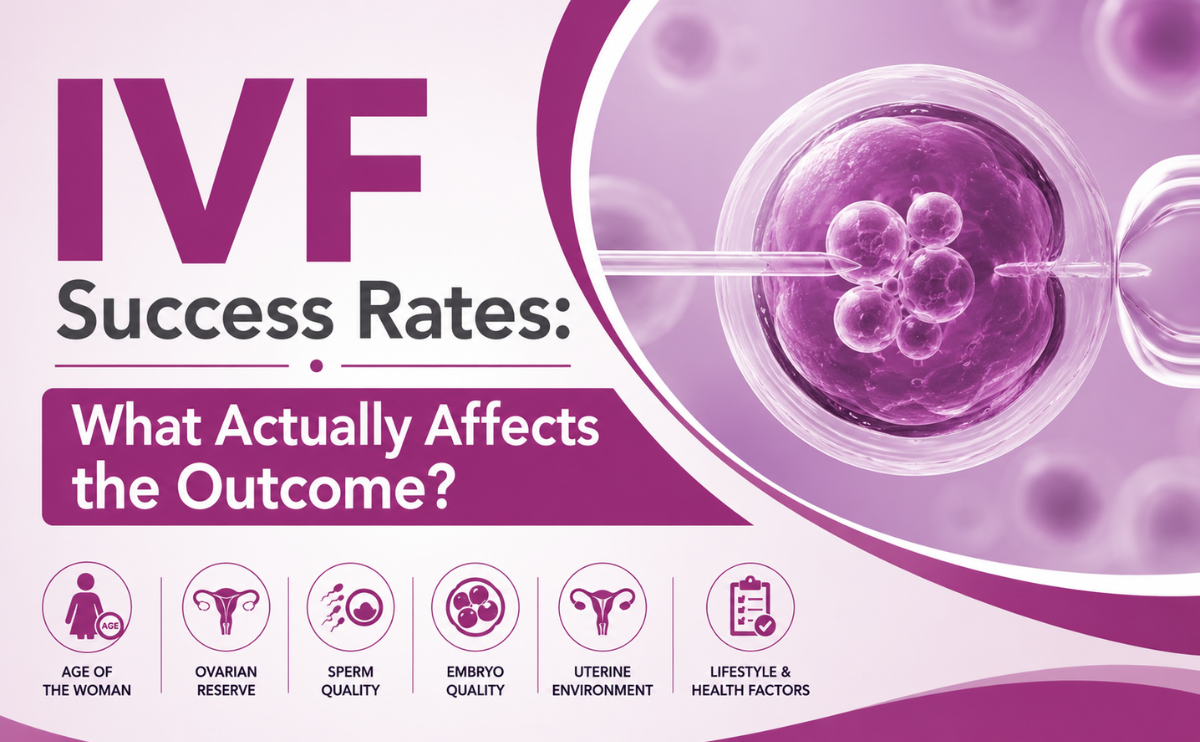
Table of Contents
ToggleKey Takeaways
- IVF success rates are influenced by multiple factors including age, egg quality, sperm health, embryo quality, uterine health, and lifestyle habits.
- Success in IVF is not determined by a single treatment step but by the entire reproductive process.
- Age remains one of the strongest predictors of IVF outcomes because it affects both egg quantity and quality.
- Conditions such as PCOS, endometriosis, low AMH, thyroid disorders, and male infertility may impact IVF success.
- Lifestyle factors including smoking, obesity, poor sleep, chronic stress, and nutrition can affect reproductive health and treatment response.
- Personalised fertility evaluation and treatment planning help optimise IVF outcomes.
Introduction
For couples struggling to conceive, IVF often represents hope, possibility, and the chance to build a family. However, one question almost every patient asks before beginning treatment is:
"What are my chances of success with IVF?"
While IVF has helped millions of couples worldwide achieve pregnancy, success rates are not the same for everyone. Two women undergoing IVF at the same fertility centre may experience completely different outcomes because fertility depends on several biological, medical, and lifestyle-related factors.
Many people focus only on the clinic's success rates, but the reality is that IVF success depends on much more than the procedure itself. Factors such as age, ovarian reserve, sperm quality, embryo development, uterine health, hormonal balance, and overall reproductive wellness all play important roles.
Understanding what affects IVF success rates can help couples set realistic expectations, make informed decisions, and identify areas that may improve their chances of conception.
What Does IVF Success Rate Actually Mean?
The term "IVF success rate" is often misunderstood.
Many people assume success means getting a positive pregnancy test immediately after embryo transfer. In reality, IVF success can be measured at several stages.
IVF outcomes may include:
- Successful egg retrieval
- Fertilisation of eggs
- Healthy embryo development
- Embryo implantation
- Clinical pregnancy confirmation
- Ongoing pregnancy
- Live birth
Each stage depends on different fertility factors. A successful fertilisation does not always guarantee implantation, and implantation does not always guarantee a healthy pregnancy.
This is why fertility specialists focus on understanding the entire fertility picture rather than relying solely on percentages.
The Most Important Factors Affecting IVF Success Rates
- Age and Egg Quality
Age is one of the most significant factors affecting IVF outcomes.
Women are born with a finite number of eggs. Over time, both the quantity and quality of these eggs naturally decline.
Why Age Matters
As reproductive age increases:
- Ovarian reserve decreases
- Egg quality declines
- Fertilisation rates may reduce
- Embryo quality may be affected
- Miscarriage risk may increase
Healthy eggs are essential for creating healthy embryos capable of successful implantation and pregnancy development.
This is why fertility specialists often assess ovarian reserve before IVF treatment through tests such as AMH evaluation and ultrasound assessment.
- Ovarian Reserve and AMH Levels
Ovarian reserve refers to the number of eggs remaining in the ovaries.
One of the most commonly used indicators of ovarian reserve is Anti-Müllerian Hormone (AMH).
Why Ovarian Reserve Matters
Ovarian reserve can influence:
- Response to fertility medications
- Number of eggs retrieved
- Treatment planning
- IVF cycle expectations
Lower AMH levels do not automatically mean pregnancy is impossible, but they may affect treatment strategy and reproductive planning.
- Embryo Quality: The Foundation of IVF Success
Embryo quality is one of the strongest predictors of implantation success.
During IVF, eggs and sperm are combined in a controlled laboratory environment to create embryos. However, not every fertilised egg develops into a healthy embryo.
Factors Influencing Embryo Quality
- Egg quality
- Sperm quality
- Genetic health
- Embryology expertise
- Laboratory conditions
Healthy embryos are more likely to:
- Continue developing normally
- Implant successfully
- Result in a healthy pregnancy
Embryo monitoring and grading help fertility specialists determine which embryos have the highest implantation potential.
- Uterine Health and Implantation
Even the highest-quality embryo requires a healthy uterine environment to implant successfully.
The uterus plays a critical role in supporting:
- Embryo attachment
- Placental development
- Early pregnancy growth
- Ongoing pregnancy maintenance
Conditions That May Affect Implantation
- Thin endometrial lining
- Fibroids
- Polyps
- Endometriosis
- Adenomyosis
- Uterine adhesions
Some women experience repeated implantation failure despite good-quality embryos because underlying uterine issues remain undiagnosed.
Procedures such as hysteroscopy may help identify structural concerns affecting implantation.
- Male Fertility and Sperm Health
Fertility is not solely a female concern.
Male fertility factors contribute significantly to conception challenges and IVF outcomes.
Key Sperm Factors Evaluated During Fertility Assessment
- Sperm count
- Sperm motility
- Sperm morphology
- DNA fragmentation
Poor sperm quality may affect:
- Fertilisation rates
- Embryo quality
- Embryo development
- Pregnancy outcomes
Lifestyle habits, infections, hormonal imbalance, obesity, smoking, and alcohol use may all influence sperm health.
- Hormonal Balance and Ovarian Response
Hormones regulate every stage of reproduction.
From follicle development and ovulation to implantation and pregnancy support, hormonal balance plays a critical role in IVF success.
Common Hormonal Conditions Affecting IVF
PCOS
Women with PCOS may experience:
- Irregular ovulation
- Hormonal imbalance
- Variable response to stimulation medications
Thyroid Disorders
Thyroid dysfunction can affect:
- Ovulation
- Implantation
- Pregnancy maintenance
Elevated Prolactin Levels
High prolactin levels may interfere with normal ovulation and reproductive function.
Because every patient responds differently, IVF medication protocols are carefully tailored and monitored throughout treatment.
- Lifestyle Factors That Affect IVF Success
Modern lifestyle habits can quietly influence reproductive health long before IVF begins.
Smoking
Smoking may negatively affect:
- Egg quality
- Sperm quality
- Implantation
- Ovarian reserve
Obesity
Excess body weight may contribute to:
- Hormonal imbalance
- Insulin resistance
- Reduced reproductive efficiency
Poor Sleep
Sleep supports healthy hormone production and reproductive function.
Chronic Stress
Stress may influence:
- Hormonal regulation
- Emotional well-being
- Treatment consistency
Alcohol Consumption
Excessive alcohol use may impact fertility and overall reproductive health.
While lifestyle changes cannot completely overcome age-related fertility decline, they may help support healthier reproductive function and treatment outcomes.
- Previous Reproductive History
A patient's reproductive history often provides valuable insights when planning IVF treatment.
Important Factors Specialists Consider
- Previous pregnancies
- Previous miscarriages
- Failed IVF cycles
- Tubal disease
- Endometriosis history
- Pelvic surgeries
Understanding previous fertility experiences helps specialists create more personalised treatment strategies.
Can IVF Success Rates Be Improved?
Although some fertility factors cannot be changed, many can be optimised before treatment begins.
Steps That May Support Better IVF Outcomes
- Early fertility evaluation
- Weight management
- Healthy nutrition
- Stress reduction
- Smoking cessation
- Hormonal management
- Treatment of uterine abnormalities
- Optimising sperm health
The goal is not simply to perform IVF but to create the best possible conditions for successful conception and pregnancy.
Why Personalised Fertility Care Matters
No two fertility journeys are the same.
Successful IVF treatment requires understanding the unique reproductive health profile of every patient.
Personalised fertility care allows specialists to:
- Tailor stimulation protocols
- Monitor ovarian response closely
- Improve embryo transfer timing
- Address underlying fertility conditions
- Optimise reproductive outcomes
This approach helps patients receive treatment that is aligned with their specific fertility needs rather than a standardised protocol.
Why Choose Mamtha Fertility for IVF Treatment?
At Mamtha Fertility, IVF treatment is guided by personalised fertility evaluation, evidence-based reproductive care, and comprehensive treatment planning. Since IVF success rates depend on multiple factors such as age, ovarian reserve, embryo quality, uterine health, sperm parameters, and hormonal balance, every treatment approach is tailored to the unique needs of each individual and couple.
The focus extends beyond the IVF procedure itself to understanding and addressing the factors that influence implantation, embryo development, and pregnancy outcomes. Through detailed fertility assessments, advanced reproductive care, and continuous patient support, Mamtha Fertility helps couples navigate their fertility journey with confidence, clarity, and personalised attention.
Conclusion
IVF success rates are influenced by a complex combination of biological, hormonal, medical, and lifestyle-related factors. Age, ovarian reserve, embryo quality, uterine health, sperm parameters, hormonal balance, and overall reproductive wellness all contribute to treatment outcomes.
Rather than focusing only on percentages, understanding the factors that affect IVF success helps couples make informed decisions and approach treatment with realistic expectations. Early fertility evaluation, personalised care, and healthy lifestyle choices can all play important roles in supporting successful reproductive outcomes and achieving long-term family-building goals.
Frequently Asked Questions
What is considered a good IVF success rate?
IVF success rates vary depending on age, fertility diagnosis, embryo quality, and overall reproductive health.
Does age affect IVF success?
Yes. Age significantly influences egg quality, ovarian reserve, embryo development, and implantation potential.
Can stress reduce IVF success?
Chronic stress may indirectly affect fertility by influencing hormonal balance and emotional well-being during treatment.
Does sperm quality matter in IVF?
Yes. Sperm health plays an important role in fertilisation, embryo development, and overall IVF outcomes.
Why do some IVF cycles fail despite good embryos?
Implantation also depends on uterine receptivity, hormonal balance, endometrial health, and overall reproductive conditions.

