
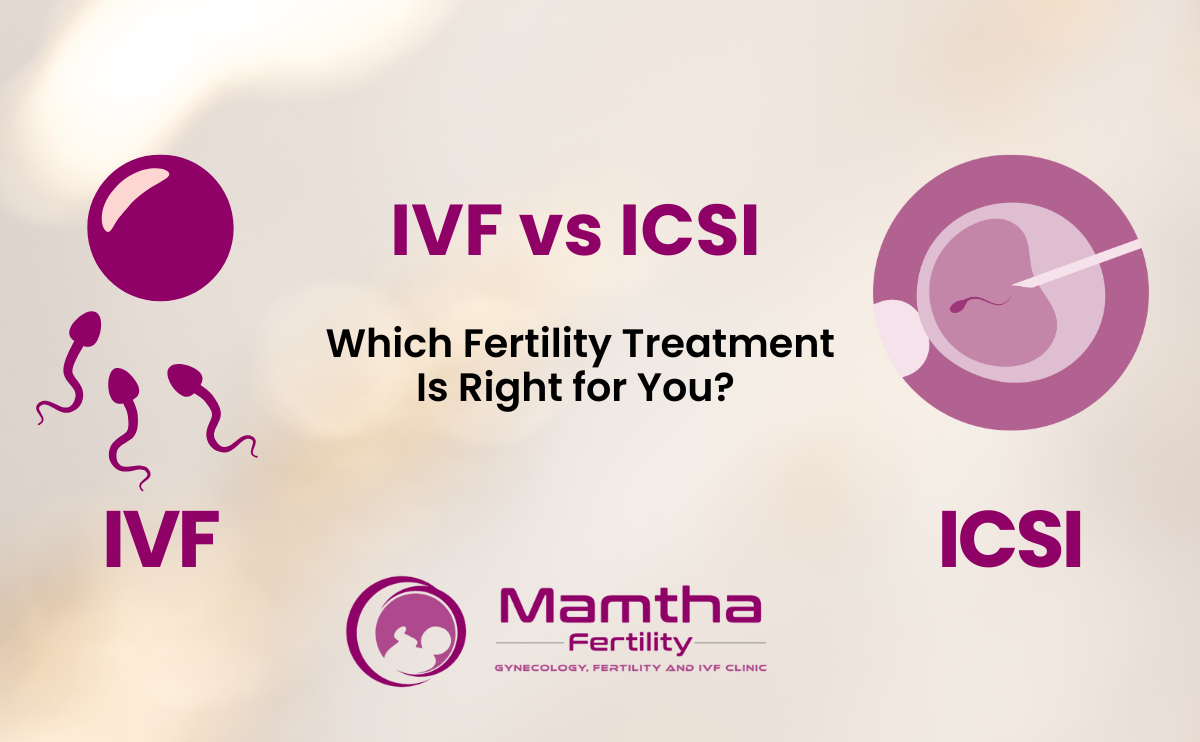
IVF vs ICSI: Which Fertility Treatment Is Right for You
Table of Contents
ToggleIVF vs ICSI: Which Fertility Treatment Is Right for You
Infertility affects millions of couples worldwide, and selecting the right fertility treatment is one of the most important decisions on the journey to parenthood. At Mamtha Fertility, we understand that every couple’s situation is unique, and a personalized approach can make all the difference.
Choosing between IVF (In Vitro Fertilization) and ICSI (Intracytoplasmic Sperm Injection) requires a careful evaluation of factors such as sperm quality, egg quality, past fertility history, and any underlying medical conditions. The right treatment not only increases the chances of conception but also minimizes unnecessary procedures, emotional stress, and financial burden.
Our team of fertility specialists, led by Dr. Mamatha C V, leverages years of experience and advanced reproductive technologies to guide couples toward the most effective fertility solution. With evidence-based protocols, transparent guidance, and compassionate care, Mamtha Fertility ensures that each treatment plan is tailored to your specific needs, maximizing success safely and efficiently.
Understanding IVF
What is IVF? (Definition & Purpose)
In Vitro Fertilization (IVF) is a highly advanced fertility treatment designed to help couples conceive when natural conception is challenging. At Mamtha Fertility, IVF is offered as a personalized, evidence-based solution for infertility caused by issues such as low ovarian reserve, blocked fallopian tubes, endometriosis, or unexplained infertility.
IVF works by retrieving eggs from the female partner, fertilizing them with sperm in a controlled laboratory environment, and transferring the resulting embryos back into the uterus. This method has helped countless couples achieve successful pregnancies, and it remains one of the most widely recommended fertility treatments worldwide.
Purpose of IVF:
- Overcome female reproductive challenges such as blocked tubes or ovulation issues.
- Support conception in cases of unexplained infertility.
- Improve chances for couples facing previous failed fertility attempts.
Allow the use of donor eggs or sperm if required.
Step-by-Step IVF Procedure
Several medical factors directly influence the success rate of an IVF cycle. Understanding these helps couples set realistic expectations and work proactively with their fertility specialist.
- Egg Retrieval
The IVF cycle begins with controlled ovarian stimulation. Medications are administered to encourage multiple eggs to mature. Once ready, eggs are retrieved using a minimally invasive procedure performed under ultrasound guidance. - Fertilization
Retrieved eggs are then fertilized with sperm in a laboratory setting. Fertilization can occur via conventional IVF or, if needed, using ICSI for cases of male infertility. The embryos are carefully monitored to ensure optimal development. - Embryo Culture & Grading
The embryos are cultured in advanced incubators, and embryologists grade them based on quality, viability, and genetic health. Only the healthiest embryos are selected for transfer to maximize success rates. - Embryo Transfer
The selected embryo is transferred into the uterus using a gentle, painless procedure. At Mamtha Fertility, we use the latest techniques to ensure precise placement and improve implantation chances.
When is IVF Recommended?
IVF is advised when natural conception isn’t possible or other fertility treatments haven’t succeeded. At Mamtha Fertility, our specialists recommend IVF after a complete evaluation of your health, fertility history, and previous treatment outcomes.
IVF is typically recommended in the following situations:
- Blocked or Damaged Fallopian Tubes: When the fallopian tubes are blocked, eggs cannot reach the uterus naturally, making IVF an effective solution.
- Endometriosis: IVF helps bypass the effects of endometrial tissue growth that can interfere with egg release or fertilization.
- Ovulation Disorders: Irregular or absent ovulation can make it difficult to conceive naturally.
- Low Ovarian Reserve or Poor Egg Quality: IVF allows monitoring and retrieval of the best-quality eggs for fertilization.
- Unexplained Infertility: When tests show no clear cause for infertility, IVF offers a structured and controlled way to achieve pregnancy.
- Male Factor Infertility: In cases of low sperm count or motility, IVF (or ICSI, if needed) can significantly improve fertilization chances.
- Age-Related Fertility Decline: IVF offers higher success rates for women over 35 by utilizing advanced stimulation and embryo selection techniques.
- Previous Failed Fertility Treatments: If intrauterine insemination (IUI) or medication cycles have not succeeded, IVF provides a higher level of intervention.
At Mamtha Fertility, each IVF recommendation is based on thorough diagnostic evaluation, transparent discussions, and individualized treatment planning—ensuring every couple receives the best chance at success.
Understanding ICSI
What is ICSI? (Definition & Purpose)
Intracytoplasmic Sperm Injection (ICSI) is an advanced fertility technique used to overcome severe male infertility or fertilization challenges. It’s a specialized form of IVF where a single healthy sperm is directly injected into the egg to achieve fertilization — increasing the chances of embryo development and pregnancy.
ICSI is performed using precision micro-manipulation tools and advanced embryology lab technology. This procedure is especially beneficial when sperm count, motility, or morphology are low, or when previous IVF cycles have resulted in poor fertilization.
Purpose of ICSI:
- To treat male infertility (low sperm count, weak motility, abnormal shape).
- To improve fertilization success after failed IVF attempts.
- To help couples with unexplained infertility or frozen sperm samples.
- To ensure optimal fertilization using advanced lab precision.
At Mamtha Fertility, each ICSI cycle is carefully planned and executed under expert embryologists and fertility specialists to ensure the best outcomes.
Step-by-Step ICSI Procedure
Before starting ICSI, every couple undergoes a detailed fertility evaluation at Mamtha Fertility to identify the right treatment protocol.
- Sperm Injection
Using advanced micromanipulation tools, a single, healthy sperm is carefully selected and injected directly into the cytoplasm of a mature egg. This process bypasses natural barriers to fertilization, helping overcome severe sperm abnormalities. - Fertilization
After injection, the fertilized egg is closely monitored in the lab for 16–18 hours to confirm successful fertilization. The presence of two pronuclei indicates normal fertilization, after which embryo development begins. - Embryo Culture & Grading
The developing embryos are cultured for several days (usually up to Day 5) in specialized incubators. Embryologists grade them based on cell number, structure, and growth rate. The highest-quality embryos are chosen for transfer to maximize success rates. - Embryo Transfer
The best-quality embryo is gently transferred into the uterus using a thin catheter. This procedure is painless and does not require anesthesia. At Mamtha Fertility, our specialists ensure a precise and comfortable transfer process to improve implantation chances.
When is ICSI Recommended?
Intracytoplasmic Sperm Injection (ICSI) is recommended when fertilization problems are linked to male infertility or when previous IVF attempts have not succeeded. At Mamtha Fertility, we advise ICSI only after a complete fertility evaluation to ensure it’s the right approach for your unique condition.
ICSI is often recommended for:
- Low Sperm Count or Poor Motility: When sperm cannot reach or penetrate the egg naturally.
- Abnormal Sperm Morphology: When sperm shape or structure affects fertilization.
- Previous Failed IVF Cycles: When traditional IVF results in little or no fertilization.
- Unexplained Infertility: When no clear cause is found despite normal test results.
- Use of Frozen Sperm or Eggs: For fertility preservation or donor-assisted cycles.
- Genetic Testing or PGT Cases: Where controlled fertilization is required for safe genetic screening.
At Mamtha Fertility, every ICSI treatment plan is individualized, combining advanced lab precision with expert clinical judgment from our fertility specialists. This ensures that couples receive the safest, most effective path to conception.
Key Differences Between IVF and ICSI (Comparison Table)
Choosing between IVF and ICSI can feel confusing — both are effective, but each suits specific fertility challenges. At Mamtha Fertility, our specialists help couples understand the key differences so that they can make an informed decision based on medical history, test results, and success potential.
| Aspect | IVF (In Vitro Fertilization) | ICSI (Intracytoplasmic Sperm Injection) |
|---|---|---|
| Procedure Complexity | Eggs are fertilized by allowing sperm to naturally penetrate the egg in a lab dish. | A single healthy sperm is directly injected into the egg using micromanipulation. |
| Fertilization Method | Natural selection – multiple sperm compete to fertilize the egg. | Controlled – embryologist selects and injects one sperm. |
| Success Rates | 45–55% (varies based on age and fertility factors). | 50–65% (higher in male infertility or fertilization issues). |
| Cost | Slightly lower; depends on medication and cycle type. | Higher due to lab precision and equipment involved. |
| Risks & Recovery | Minimal; similar to ICSI but depends on egg retrieval response. | Minimal; additional lab steps, but safe and well-tolerated. |
| Who it’s Suitable For | Couples with normal sperm parameters or unexplained infertility. | Couples with male infertility, low sperm count, or previous IVF failure. |
At Mamtha Fertility, both IVF and ICSI are performed in our advanced embryology labs using the latest technologies, ensuring high success rates, precision, and patient comfort.
Who Should Choose IVF or ICSI?
The choice between IVF and ICSI depends on the underlying cause of infertility. At Mamtha Fertility, we personalize every treatment plan based on diagnosis, fertility goals, and past treatment outcomes.
Male Infertility Cases
If infertility is due to low sperm count, poor motility, or abnormal morphology, ICSI is the preferred option. By directly injecting a single healthy sperm into the egg, it bypasses natural fertilization barriers, improving the chances of success.
Female Infertility Cases
When infertility is caused by ovulation disorders, blocked fallopian tubes, endometriosis, or age-related decline, IVF is often recommended. It allows egg retrieval, fertilization, and embryo transfer under controlled conditions, offering higher success compared to natural conception.
Unexplained Infertility
In cases where standard tests show no clear cause of infertility, both IVF and ICSI may be considered. At Mamtha Fertility, doctors decide the best protocol based on previous response to treatment and laboratory findings.
Risks and Considerations
Medical Risks
Both IVF and ICSI are safe and minimally invasive when performed under expert supervision. However, like any medical procedure, a few mild, short-term effects may occur.
At Mamtha Fertility, we use strict monitoring protocols and individualized medication plans to keep every patient safe.
Possible medical risks include:
- Ovarian Hyperstimulation Syndrome (OHSS): Rare swelling or discomfort due to hormone response.
- Mild Bloating or Cramping: Common after egg retrieval and usually resolves within a few days.
- Multiple Pregnancy: Can occur when more than one embryo implants; carefully managed through single-embryo transfer when appropriate.
- Procedure-related Infection (Very Rare): Prevented through sterile techniques and antibiotic coverage.
Each patient’s treatment is closely tracked through advanced imaging, lab analytics, and physician review, ensuring early detection and safe management of any complication.
Emotional and Financial Considerations
Fertility treatment is not just a medical journey — it’s an emotional and financial commitment. Couples often experience moments of hope, stress, and anticipation.
At Mamtha Fertility, we believe compassionate support is as important as clinical precision.
Emotional care:
- Dedicated counseling to help manage stress and expectations.
- Transparent discussions about success rates, next-step planning, and emotional coping.
- Personalized guidance from our care team throughout each cycle.
Financial clarity:
- Transparent cost breakdowns with no hidden charges.
- Guidance on medication costs, package options, and insurance coverage.
- Emphasis on treatment value — achieving success efficiently and safely.
By addressing both the medical and emotional sides of treatment, Mamtha Fertility ensures couples feel confident, supported, and informed at every step.
Conclusion: Your Path to Parenthood Starts with the Right Choice
Deciding between IVF and ICSI is not just about technology — it’s about finding the treatment that best fits your body, your goals, and your journey. At Mamtha Fertility, we combine advanced reproductive science with compassionate, personalized care to help every couple move one step closer to parenthood.
Whether you require IVF to overcome female fertility challenges or ICSI to address male-factor infertility, our team — led by Dr. Mamatha C V — ensures that every decision is backed by evidence, expertise, and empathy. From diagnosis to embryo transfer and beyond, you receive transparent guidance, ethical care, and continuous support at every stage.
Because at Mamtha Fertility, your dream of having a child isn’t just our mission — it’s our shared purpose.
Reference Links
- Does ICSI Improve IVF Success? Everything You Need to Know.
- All You Need To Know About IVF & ICSI Treatment.