
AMH Test Explained: Normal AMH Levels by Age and What Your Results Mean

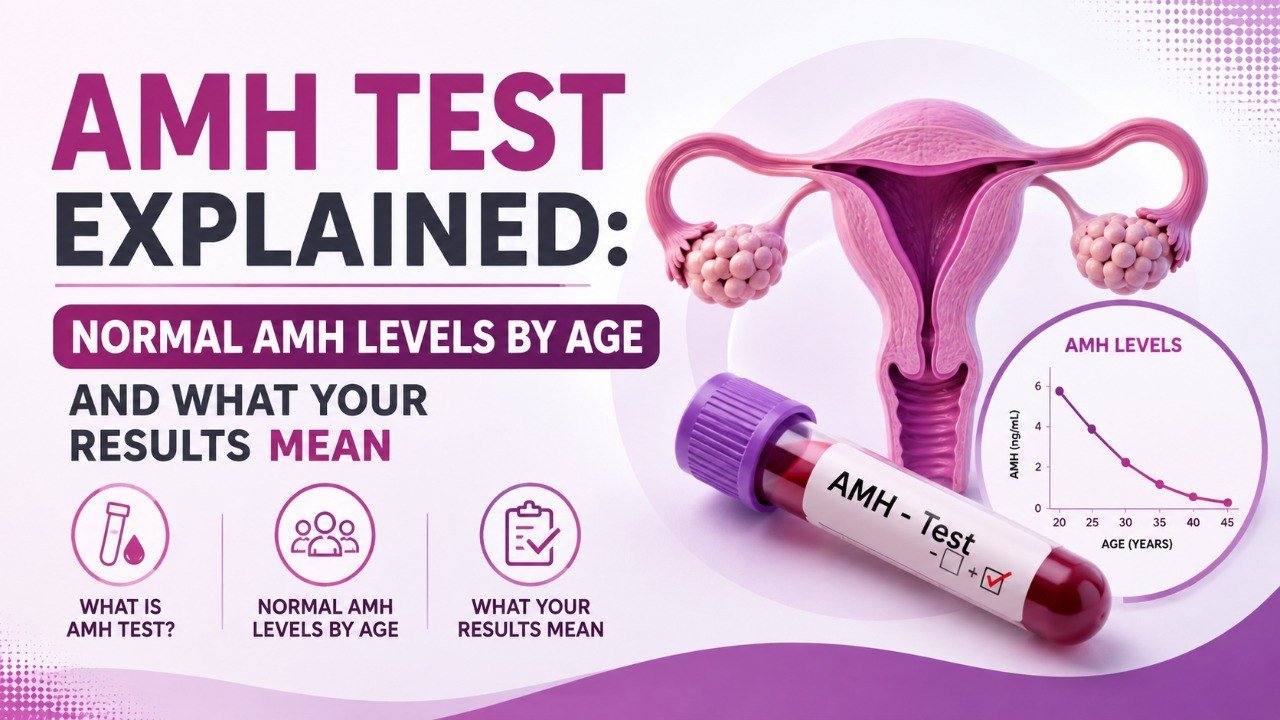
Table of Contents
ToggleKey Takeaways
- The Anti-Müllerian Hormone (AMH) test is a simple blood test that helps estimate a woman's ovarian reserve or the number of eggs remaining in the ovaries.
- AMH levels naturally decline with age, but the "normal" range varies from one woman to another.
- A low AMH level does not necessarily mean you cannot get pregnant naturally, and a high AMH level does not always indicate better fertility.
- AMH is only one part of a comprehensive fertility assessment and should be interpreted alongside other tests and your medical history.
- The AMH test is commonly recommended for women planning pregnancy, undergoing fertility treatment, or wanting to understand their reproductive health.
Consulting a fertility specialist can help you understand your AMH results and determine the most appropriate next steps based on your individual fertility goals.
Introduction
"I got my AMH test report, but I don't know what the numbers mean."
This is one of the most common concerns among women visiting a fertility clinic. Whether your AMH level is lower or higher than expected, seeing an unfamiliar number on your report can be confusing and sometimes worrying.
The Anti-Müllerian Hormone (AMH) test has become an important part of fertility evaluation because it provides valuable information about ovarian reserve. However, AMH is often misunderstood. Many women assume that a low AMH level means pregnancy is impossible or that a high AMH level guarantees fertility. In reality, neither is true.
AMH is a useful indicator of the number of eggs remaining in the ovaries, but it does not measure egg quality or predict your ability to conceive naturally. Fertility depends on several factors, including age, ovulation, overall reproductive health, sperm quality, and lifestyle.
In this article, we'll explain what the AMH test measures, what normal AMH levels by age generally look like, how to interpret your results, and when you should consider consulting a fertility specialist.
What Is an AMH Test?
The Anti-Müllerian Hormone (AMH) test is a blood test that measures the level of Anti-Müllerian Hormone in your body. This hormone is produced by the small follicles in the ovaries that contain immature eggs.
Since the number of these follicles reflects the remaining egg supply, AMH provides an estimate of a woman's ovarian reserve. Unlike many other fertility hormones, AMH levels remain relatively stable throughout the menstrual cycle, so the test can usually be performed on any day.
Doctors commonly recommend the AMH test as part of a fertility assessment because it helps them understand how the ovaries may respond to fertility treatment and supports future pregnancy planning.
The AMH Test Helps Assess:
- Ovarian reserve
- Expected response to fertility medications
- Fertility treatment planning
- Egg freezing suitability
- IVF treatment planning
- Certain hormonal conditions such as PCOS
Although AMH provides valuable information, it should always be interpreted alongside other fertility investigations rather than on its own.
What Does the AMH Test Measure?
Many people believe the AMH test measures fertility directly, but that is not its purpose.
Instead, AMH estimates the number of eggs remaining in the ovaries, also known as ovarian reserve.
This information helps fertility specialists understand how the ovaries may respond during fertility treatment, particularly when medications are used to stimulate egg development.
AMH Can Help Estimate:
- Remaining ovarian reserve
- Expected ovarian response during IVF
- Fertility planning
- Risk of reduced ovarian reserve
- Possibility of excessive ovarian response in some women with PCOS
What the AMH Test Does NOT Tell You
This is one of the biggest misconceptions surrounding AMH testing.
An AMH result alone cannot determine whether you can or cannot become pregnant.
The AMH test does not measure:
- Egg quality
- Whether you are ovulating regularly
- Whether your fallopian tubes are open
- The health of your uterus
- Your partner's sperm quality
- Your exact chances of natural pregnancy
- The exact age at menopause
A woman with a lower AMH level may still conceive naturally, while someone with a higher AMH level may face fertility challenges for reasons unrelated to ovarian reserve.
This is why fertility specialists always interpret AMH alongside age, medical history, ultrasound findings, hormone levels, and other fertility investigations.
Why Is the AMH Test Important?
The AMH test plays an important role in modern fertility care because it helps doctors better understand ovarian function and plan appropriate treatment.
It may be recommended for women who are trying to conceive, planning pregnancy in the future, or considering fertility preservation.
The AMH Test Is Commonly Used For:
Fertility Evaluation
AMH helps assess ovarian reserve as part of a comprehensive fertility work-up.
IVF Treatment Planning
Doctors use AMH levels to estimate how the ovaries may respond to fertility medications during an IVF cycle.
Egg Freezing
Women considering delaying pregnancy may undergo AMH testing to better understand their ovarian reserve before deciding on egg freezing.
Assessing Reduced Ovarian Reserve
Women with unexpectedly low ovarian reserve may benefit from early fertility counselling and personalised treatment planning.
Supporting PCOS Evaluation
Women with Polycystic Ovary Syndrome (PCOS) often have higher AMH levels because they have a larger number of small ovarian follicles. While AMH alone cannot diagnose PCOS, it can provide additional information when interpreted alongside symptoms, ultrasound findings, and hormone tests.
Normal AMH Levels by Age
AMH levels naturally decline as women grow older because the number of eggs in the ovaries gradually decreases over time. However, there is no single "perfect" AMH value that applies to everyone.
The ranges below are approximate and may vary slightly depending on the laboratory, testing method, and individual factors.
| Age Group | Typical AMH Range (ng/mL) | General Interpretation |
|---|---|---|
| Under 25 years | 3.0 – 6.8 | Usually indicates a higher ovarian reserve |
| 25–29 years | 2.5 – 6.0 | Generally considered healthy ovarian reserve |
| 30–34 years | 2.0 – 4.5 | Normal ovarian reserve for this age group |
| 35–39 years | 1.5 – 3.5 | Gradual age-related decline is expected |
| 40–44 years | 0.5 – 2.5 | Lower ovarian reserve is common |
| 45 years and above | Below 1.0 | Ovarian reserve is usually significantly reduced |
Important: These values are intended as a general guide. AMH results should always be interpreted by a fertility specialist in the context of your age, menstrual history, ultrasound findings, and overall reproductive health.
How to Understand Your AMH Results
An AMH report should never be interpreted based on the number alone. The same value may have different implications depending on a woman's age and overall fertility profile.
Understanding what your result may indicate can help you have a more informed discussion with your fertility specialist.
High AMH Levels
Higher-than-average AMH levels generally indicate a larger number of remaining ovarian follicles.
High AMH may be seen in:
- Women with a higher ovarian reserve
- Women with PCOS
- Younger women with healthy ovarian function
While a high AMH level can suggest a good ovarian response during fertility treatment, it does not automatically mean better fertility. In some women, particularly those with PCOS, very high AMH levels may increase the risk of an excessive response to ovarian stimulation during IVF.
Normal AMH Levels
A normal AMH level generally indicates that the ovarian reserve is within the expected range for your age.
However, normal AMH does not guarantee pregnancy, as fertility also depends on:
- Egg quality
- Regular ovulation
- Healthy fallopian tubes
- Uterine health
- Sperm quality
- Overall reproductive health
For this reason, AMH is considered one part of a comprehensive fertility evaluation rather than a standalone measure of fertility.
Low AMH Levels: What Do They Mean?
A low AMH level indicates that the number of eggs remaining in the ovaries is lower than expected for your age. This is referred to as reduced ovarian reserve. It is important to remember that this reflects the quantity of eggs, not their quality.
Many women become anxious after seeing a low AMH result, but a lower ovarian reserve does not automatically mean pregnancy is impossible. Some women with low AMH continue to ovulate regularly and conceive naturally, while others may benefit from fertility treatment based on their individual circumstances.
Your fertility specialist will interpret your AMH result alongside factors such as age, menstrual history, ultrasound findings, hormone levels, and your partner's fertility before recommending any treatment.
A Low AMH Level May Suggest:
- Reduced ovarian reserve
- A potentially lower response to fertility medications
- The need for timely fertility planning
- Further fertility evaluation to understand the overall reproductive picture
A personalised assessment is essential, as the same AMH value may have different implications for different women.
Does Low AMH Mean You Cannot Get Pregnant Naturally?
One of the biggest myths surrounding fertility is that low AMH equals infertility. In reality, this is not true.
AMH measures the number of eggs remaining in the ovaries, but it does not assess the quality of those eggs. Egg quality is influenced more by age than by AMH levels.
A woman with low AMH who ovulates regularly and has healthy fallopian tubes and a partner with normal sperm parameters may still conceive naturally. On the other hand, a woman with normal AMH may experience fertility challenges due to other factors.
Natural conception depends on several factors working together, including:
- Regular ovulation
- Healthy egg quality
- Open fallopian tubes
- A healthy uterus
- Good sperm quality
- Overall reproductive health
This is why AMH should always be considered as one piece of the fertility puzzle rather than a definitive predictor of pregnancy.
Can High AMH Be a Problem?
Many people assume that a high AMH level is always beneficial. While it often indicates a larger ovarian reserve, very high AMH levels can sometimes be associated with certain reproductive conditions.
One of the most common conditions linked to elevated AMH is Polycystic Ovary Syndrome (PCOS). Women with PCOS often have a higher number of small ovarian follicles, which can lead to increased AMH levels.
A high AMH level may also indicate that the ovaries are likely to respond strongly to fertility medications. During IVF treatment, this can increase the risk of Ovarian Hyperstimulation Syndrome (OHSS) if stimulation is not carefully monitored.
Therefore, a high AMH result should be interpreted by a fertility specialist, especially when planning fertility treatment.
Factors That Can Affect AMH Levels
AMH levels naturally vary from one woman to another. Several factors can influence the results, and understanding these can help place your report in the right context.
Age
Age is the most significant factor affecting AMH levels. Women are born with a finite number of eggs, and this reserve gradually declines over time. As a result, AMH levels naturally decrease with advancing age.
Polycystic Ovary Syndrome (PCOS)
Women with PCOS often have higher AMH levels due to an increased number of immature ovarian follicles. However, high AMH alone is not sufficient to diagnose PCOS.
Previous Ovarian Surgery
Surgical procedures involving the ovaries, such as cyst removal or treatment for endometriosis, may reduce ovarian reserve and influence AMH levels.
Medical Treatments
Certain treatments, including chemotherapy and pelvic radiation, can affect ovarian function and reduce AMH levels. Women planning these treatments may benefit from fertility preservation counselling.
Smoking
Smoking has been associated with a faster decline in ovarian reserve and may contribute to lower AMH levels over time.
Genetics
Some women naturally have a higher or lower ovarian reserve due to genetic factors. This variation highlights the importance of interpreting AMH results on an individual basis.
When Should You Get an AMH Test?
An AMH test is not required for every woman. However, it can provide valuable information in certain situations, particularly when planning pregnancy or undergoing fertility evaluation.
Your doctor may recommend an AMH test if you:
- Have been trying to conceive without success
- Experience irregular or absent menstrual cycles
- Have been diagnosed with PCOS
- Are planning IVF or other fertility treatments
- Are considering egg freezing
- Have a family history of early menopause
- Have undergone ovarian surgery
- Have received chemotherapy or radiation therapy
The test is often combined with other fertility investigations to provide a comprehensive assessment of reproductive health.
Can You Improve AMH Levels Naturally?
Many women search for ways to increase their AMH levels naturally. However, current scientific evidence suggests that no medication, supplement, or diet has been proven to significantly increase ovarian reserve or permanently raise AMH levels.
That said, maintaining a healthy lifestyle can support overall reproductive health and optimise fertility.
Healthy habits include:
- Eating a balanced, nutrient-rich diet
- Maintaining a healthy body weight
- Exercising regularly
- Getting adequate sleep
- Managing stress
- Avoiding smoking and excessive alcohol consumption
Rather than focusing solely on increasing AMH, it is more beneficial to improve overall reproductive health and work closely with a fertility specialist to develop an individualised treatment plan.
What Other Fertility Tests Are Done Along With AMH?
The AMH test provides valuable information about ovarian reserve, but it does not give a complete picture of fertility. Fertility specialists often recommend additional tests to better understand reproductive health.
Common investigations may include:
Hormonal Blood Tests
These assess hormones involved in ovulation and reproductive function, such as FSH, LH, estradiol, thyroid hormones, and prolactin.
Antral Follicle Count (AFC)
An ultrasound scan is used to count the small follicles in the ovaries, providing another estimate of ovarian reserve.
Pelvic Ultrasound
This helps evaluate the uterus, ovaries, and reproductive anatomy, while also identifying conditions such as fibroids, ovarian cysts, or features suggestive of PCOS.
Ovulation Assessment
Tracking ovulation helps determine whether eggs are being released regularly during the menstrual cycle.
Semen Analysis
Since male factors contribute to many infertility cases, evaluating sperm count, movement, and morphology is an important part of a complete fertility assessment.
Together, these investigations allow fertility specialists to create a personalised treatment plan based on each couple’s unique circumstances.
Why Choose Mamtha Fertility for AMH Testing and Fertility Evaluation?
At Mamtha Fertility, we understand that an AMH result is only one part of your fertility journey. Rather than focusing on a single number, our specialists perform a comprehensive fertility evaluation that considers your age, ovarian reserve, menstrual history, ultrasound findings, hormonal profile, and overall reproductive health.
Every treatment plan is personalised to your individual needs and family-building goals. Whether you are planning pregnancy, exploring fertility preservation, or seeking fertility treatment, our approach combines advanced diagnostics, evidence-based care, and compassionate guidance to help you make informed decisions with confidence.
By offering personalised fertility assessments and tailored treatment strategies, Mamtha Fertility supports individuals and couples at every stage of their reproductive journey.
Conclusion
The AMH test is a valuable tool for understanding ovarian reserve and planning fertility care, but it is not a standalone measure of fertility. Whether your AMH level is high, normal, or low, the result should always be interpreted alongside your age, ovulation, hormone levels, ultrasound findings, and overall reproductive health.
A low AMH level does not mean pregnancy is impossible, just as a high AMH level does not guarantee fertility. Every woman’s reproductive journey is unique, and personalised evaluation is essential for making informed decisions about family planning and fertility treatment.
If you have questions about your AMH test results or are planning pregnancy, consulting a fertility specialist can help you better understand your reproductive health and explore the most appropriate options based on your individual needs.
Frequently Asked Questions
What is a normal AMH level by age?
Normal AMH levels vary with age, and there is no single ideal value for everyone. A fertility specialist interprets your result based on your age and overall reproductive health.
Can I get pregnant naturally with low AMH?
Yes. Many women with low AMH conceive naturally. AMH reflects egg quantity, not egg quality, and should be interpreted alongside other fertility factors.
Can frozen embryos result in healthy babies?
Yes. Frozen embryos have helped many couples achieve healthy pregnancies and healthy babies using modern embryo freezing techniques.
Does a high AMH level mean I am more fertile?
Not necessarily. High AMH often indicates a larger ovarian reserve, but it may also be associated with PCOS. Fertility depends on multiple factors beyond AMH.
Can AMH predict menopause?
AMH may provide information about declining ovarian reserve, but it cannot accurately predict the exact age at which menopause will occur.
How often should I repeat an AMH test?
The need for repeat testing depends on your age, fertility goals, and your doctor’s recommendation. Routine repeat testing is not necessary for everyone.
Is fasting required before an AMH test?
In most cases, fasting is not required. However, always follow the instructions provided by your healthcare provider or laboratory.
Can AMH levels change over time?
Yes. AMH levels naturally decline with age as ovarian reserve decreases. Minor variations may also occur depending on the laboratory and testing method.