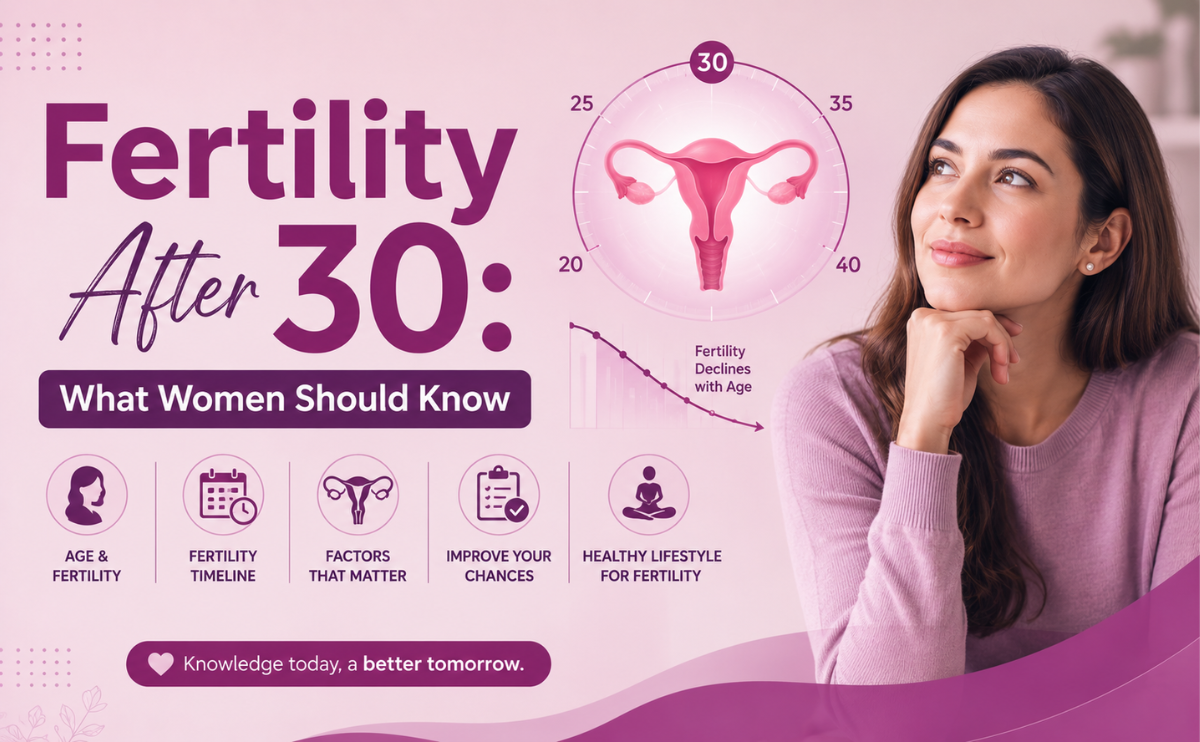
Fertility After 30: What Women Should Know
Table of Contents
ToggleKey Takeaways
- Fertility naturally begins to decline after the age of 30, primarily due to changes in egg quantity and quality.
- Many women conceive naturally in their 30s, but pregnancy may take longer compared to earlier reproductive years.
- Factors such as ovarian reserve, hormonal balance, lifestyle habits, and underlying medical conditions influence fertility after 30.
- Conditions like PCOS, endometriosis, thyroid disorders, and low AMH may affect conception chances.
- Early fertility evaluation can help identify potential concerns before they become more complex.
Understanding fertility changes after 30 allows women to make informed reproductive decisions and explore suitable fertility options when needed.
Introduction
Over the last decade, more women have chosen to pursue higher education, build careers, achieve financial stability, or wait for the right life circumstances before starting a family. As a result, pregnancy planning in the 30s has become increasingly common.
While many women successfully conceive and have healthy pregnancies after 30, fertility does not remain constant throughout the reproductive years. Natural biological changes begin to occur gradually, affecting both egg quantity and egg quality.
One of the most common questions fertility specialists hear is:
"Can I still get pregnant after 30?"
The answer is yes. However, understanding how fertility changes with age can help women make informed decisions about family planning, fertility preservation, and reproductive health.
Rather than creating anxiety, understanding fertility after 30 empowers women with knowledge, helping them recognise when medical guidance may be beneficial and what steps can support reproductive health.
How Fertility Changes After 30
A woman is born with all the eggs she will ever have. Unlike other cells in the body, eggs cannot be regenerated over time.
Throughout life, the number of available eggs gradually decreases. Alongside this decline, egg quality also changes.
What Happens to Fertility After 30?
As women enter their 30s:
- Ovarian reserve gradually decreases
- Egg quality slowly declines
- Fertilisation rates may reduce
- Chromosomal abnormalities become more common
- Pregnancy may take longer to achieve
These changes usually occur gradually rather than suddenly. Many women continue to conceive naturally throughout their 30s, but fertility potential is generally higher in earlier reproductive years.
Why Egg Quality Matters More Than Egg Quantity
When discussing fertility after 30, many women focus only on the number of eggs remaining. However, egg quality often plays an even more important role.
Healthy eggs contribute to:
- Successful fertilisation
- Healthy embryo development
- Successful implantation
- Reduced miscarriage risk
- Healthy pregnancy progression
As egg quality declines, the likelihood of chromosomal abnormalities may increase, affecting embryo development and pregnancy outcomes.
This is one reason fertility specialists evaluate both ovarian reserve and overall reproductive health when assessing fertility potential.
Fertility After 35: What Changes Further?
While fertility decline begins gradually after 30, the rate of decline often becomes more noticeable after 35.
This does not mean pregnancy becomes impossible. Many women conceive naturally and through fertility treatment after 35. However, reproductive challenges may become more common.
Factors That May Become More Relevant After 35
- Reduced ovarian reserve
- Lower egg quality
- Longer time to conception
- Increased miscarriage risk
- Greater likelihood of fertility-related medical conditions
Because fertility becomes more individualised with age, early assessment can provide valuable information for future family planning.
Common Fertility Challenges Women May Face After 30
Age is not the only factor affecting fertility.
Several medical conditions can influence reproductive health regardless of age.
Polycystic Ovary Syndrome (PCOS)
PCOS is one of the most common causes of ovulation-related fertility challenges.
Women with PCOS may experience:
- Irregular periods
- Delayed ovulation
- Hormonal imbalance
- Difficulty predicting fertile windows
Endometriosis
Endometriosis occurs when tissue similar to the uterine lining grows outside the uterus.
It may affect:
- Ovarian function
- Implantation
- Pelvic anatomy
- Reproductive health
Thyroid Disorders
Thyroid hormones play a significant role in regulating reproductive function.
Both underactive and overactive thyroid conditions may affect:
- Ovulation
- Menstrual cycles
- Fertility potential
Low AMH Levels
AMH (Anti-Müllerian Hormone) helps estimate ovarian reserve.
Lower AMH levels may indicate reduced egg supply, although they do not necessarily predict an individual's ability to become pregnant.
Lifestyle Factors That Affect Fertility After 30
While age cannot be changed, several lifestyle factors can influence reproductive health.
Maintaining a Healthy Weight
Body weight can affect:
- Hormonal balance
- Ovulation
- Menstrual regularity
- Pregnancy outcomes
Both obesity and being underweight may impact fertility.
Managing Stress
Although stress does not directly cause infertility, chronic stress may affect:
- Hormonal regulation
- Sleep quality
- Emotional well-being
- Overall reproductive health
Prioritising Sleep
Sleep supports healthy hormone production and reproductive function.
Poor sleep patterns may affect:
- Ovulation
- Hormonal balance
- Metabolic health
Balanced Nutrition
Nutrient-rich diets support:
- Hormonal health
- Egg quality
- Metabolic function
- Overall reproductive wellness
When Should You Consider a Fertility Evaluation?
Many women are unsure when to seek professional fertility advice.
A fertility evaluation may be beneficial if:
- Pregnancy has not occurred despite regular attempts
- Menstrual cycles are irregular
- There is a history of PCOS or endometriosis
- Previous miscarriages have occurred
- Ovarian reserve concerns exist
- Reproductive age is increasing and pregnancy is being planned
A fertility assessment does not automatically mean fertility treatment is required. In many cases, evaluation simply provides clarity about reproductive health and future options.
What Does a Fertility Assessment Usually Involve?
A fertility specialist may recommend:
- Medical history review
- Hormonal testing
- AMH assessment
- Ultrasound evaluation
- Ovulation assessment
- Reproductive health screening
These investigations help identify factors that may influence conception and guide personalised fertility planning.
Fertility Treatment Options After 30
Treatment recommendations depend entirely on individual circumstances.
Depending on fertility evaluation findings, options may include:
- Ovulation induction
- Lifestyle modification
- Hormonal management
- Intrauterine insemination (IUI)
- In vitro fertilisation (IVF)
- Frozen embryo transfer
- Fertility preservation strategies
The goal is to select the most appropriate approach based on reproductive health needs rather than age alone.
Why Early Awareness Matters
One of the biggest misconceptions about fertility is that reproductive health remains unchanged until pregnancy is actively attempted.
In reality, understanding fertility earlier allows women to:
- Make informed family planning decisions
- Address underlying medical conditions
- Evaluate ovarian reserve
- Explore fertility preservation options
- Seek timely medical guidance if needed
Knowledge does not create pressure—it creates options.
Why Choose Mamtha Fertility for Fertility Evaluation and Treatment?
At Mamtha Fertility, fertility care focuses on personalised evaluation, evidence-based treatment planning, and compassionate reproductive support. Since fertility after 30 is influenced by multiple factors including ovarian reserve, hormonal balance, ovulation patterns, lifestyle habits, and reproductive health conditions, every treatment approach is tailored according to the unique needs of each individual.
With comprehensive fertility assessments, advanced reproductive care, and continuous patient guidance, Mamtha Fertility supports women in understanding their fertility potential and exploring suitable treatment pathways with clarity, confidence, and personalised attention.
Conclusion
Fertility after 30 is influenced by a combination of age-related changes, reproductive health conditions, hormonal balance, and lifestyle factors. While many women successfully conceive in their 30s, understanding how fertility evolves over time can help support informed family planning and proactive reproductive care.
Rather than viewing age as a limitation, it is more helpful to see it as one factor among many that influence fertility. Early awareness, healthy lifestyle choices, and timely fertility evaluation can help women better understand their reproductive health and make confident decisions about their future family-building goals.
Frequently Asked Questions
Can I get pregnant naturally after 30?
Yes. Many women conceive naturally after 30. However, fertility gradually declines with age, and pregnancy may take longer compared to earlier reproductive years.
Does fertility drop immediately after turning 30?
No. Fertility decline occurs gradually rather than suddenly. Individual reproductive health varies significantly from person to person.
What age does fertility decline the most?
Fertility decline generally becomes more noticeable after 35, although reproductive changes begin earlier.
Should I test my fertility after 30?
Women planning pregnancy or concerned about reproductive health may benefit from fertility evaluation, especially if conception is delayed or medical conditions are present.
Can lifestyle changes improve fertility after 30?
Healthy lifestyle habits support reproductive health and may improve overall fertility potential, although they cannot completely reverse age-related biological changes.