PCOS and Infertility: Can You Still Get Pregnant Naturally?

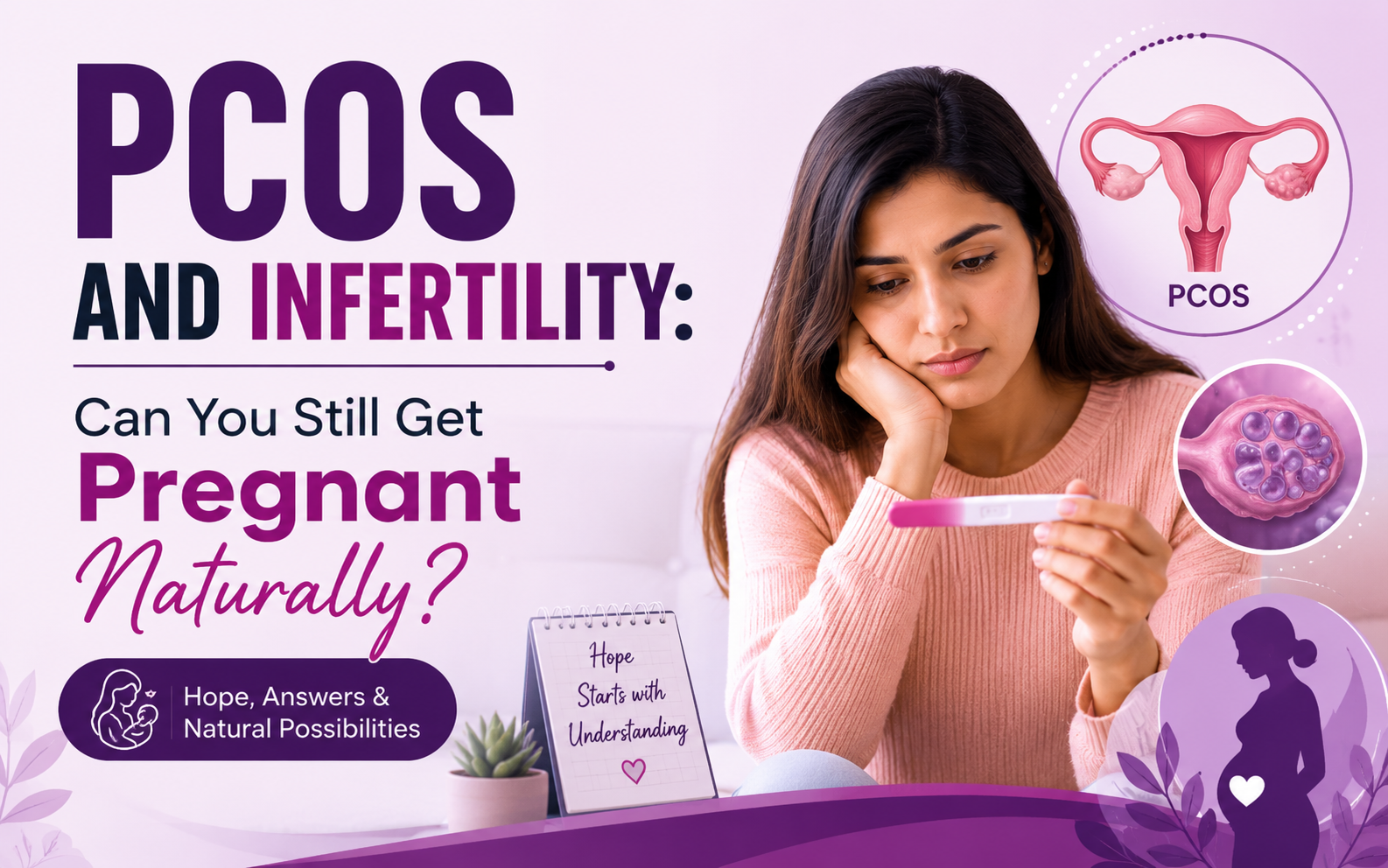
Table of Contents
ToggleKey Takeaways
- PCOS is one of the most common hormonal conditions affecting women of reproductive age and can impact fertility.
- Many women with PCOS can still get pregnant naturally, although it may take longer due to irregular ovulation.
- PCOS does not always cause infertility, but it can reduce the chances of conception if left unmanaged.
- Lifestyle changes, weight management, balanced nutrition, and regular physical activity may improve ovulation and reproductive health.
- Early diagnosis and personalised fertility evaluation can help identify the most appropriate treatment approach.
Introduction
Receiving a diagnosis of Polycystic Ovary Syndrome (PCOS) often brings many questions, especially for women planning to start a family. One of the first concerns is usually:
"Can I still get pregnant naturally if I have PCOS?"
The answer is yes—many women with PCOS conceive naturally and go on to have healthy pregnancies. However, because PCOS affects hormone levels and ovulation, it can sometimes make conception more challenging than expected.
PCOS is one of the leading causes of ovulatory infertility, but it does not affect every woman in the same way. Some women experience irregular menstrual cycles, while others continue to ovulate normally. The severity of symptoms, overall health, and lifestyle factors all influence fertility outcomes.
Understanding how PCOS affects fertility, recognising its symptoms, and seeking timely medical guidance can help women make informed decisions and improve their chances of conception.
What Is PCOS?
Polycystic Ovary Syndrome (PCOS) is a common hormonal disorder that affects the normal functioning of the ovaries. It occurs when hormonal imbalances interfere with the growth and release of eggs during the menstrual cycle.
Instead of releasing a mature egg each month, the ovaries may develop multiple small follicles that do not mature completely. This can lead to irregular ovulation or, in some cases, the absence of ovulation altogether.
PCOS affects women differently. Some experience noticeable symptoms, while others may only discover they have PCOS when trying to conceive.
Common Symptoms of PCOS
Women with PCOS may experience:
- Irregular or missed menstrual periods
- Difficulty predicting ovulation
- Excess facial or body hair
- Acne or oily skin
- Weight gain or difficulty losing weight
- Hair thinning on the scalp
- Multiple small ovarian follicles seen on ultrasound
Not every woman with PCOS experiences all these symptoms, and the condition can vary in severity.
How Does PCOS Affect Fertility?
To understand how PCOS affects fertility, it helps to understand the role of ovulation.
During a typical menstrual cycle, hormones stimulate the growth of an egg, which is released during ovulation. This egg can then be fertilised by sperm, leading to pregnancy.
With PCOS, hormonal imbalance can interrupt this process.
How PCOS Can Reduce Fertility
PCOS may affect fertility by:
- Preventing regular ovulation
- Delaying egg maturation
- Causing irregular menstrual cycles
- Affecting hormone production
- Reducing the number of predictable fertile days
Without regular ovulation, the opportunity for natural conception becomes less frequent, making pregnancy more difficult to achieve.
However, it is important to remember that PCOS does not automatically mean infertility. Many women continue to ovulate occasionally and may conceive naturally.
Can You Still Get Pregnant Naturally with PCOS?
Yes. Many women with PCOS become pregnant naturally without fertility treatment.
The likelihood of natural conception depends on several factors, including:
- Frequency of ovulation
- Age
- Overall reproductive health
- Body weight
- Hormonal balance
- Presence of other fertility conditions
- Male partner's fertility
Women who continue to ovulate, even if irregularly, still have the potential to conceive naturally.
For others, improving ovulation through lifestyle changes or medical support may significantly increase pregnancy chances.
Every fertility journey is unique, which is why individual evaluation is important rather than assuming PCOS will always prevent pregnancy.
Signs That PCOS May Be Affecting Your Fertility
Not every woman with PCOS experiences fertility difficulties. However, certain signs may suggest that the condition is interfering with ovulation and conception.
1. Irregular or Missed Periods
One of the most common signs of PCOS is irregular menstruation.
Cycles may become:
- Longer than usual
- Shorter than expected
- Unpredictable
- Completely absent for several months
Irregular periods often indicate irregular ovulation, reducing the number of opportunities for conception.
2. Difficulty Tracking Ovulation
Women with PCOS often find it difficult to identify their fertile window because ovulation does not occur consistently.
This may lead to:
- Unpredictable ovulation
- Difficulty timing intercourse
- Longer time to conception
3. Pregnancy Has Not Occurred Despite Regular Attempts
Some women with PCOS continue trying to conceive for many months without success.
Delayed conception may indicate:
- Infrequent ovulation
- Hormonal imbalance
- Additional fertility factors affecting pregnancy
A fertility evaluation helps determine whether PCOS is the primary cause or whether other reproductive health concerns are also present.
4. Weight Gain and Insulin Resistance
Many women with PCOS also experience insulin resistance, which may contribute to:
- Weight gain
- Difficulty losing weight
- Hormonal imbalance
- Reduced ovulation frequency
Although not every woman with PCOS is overweight, maintaining a healthy body weight may improve hormonal function and support more regular ovulation.
5. Elevated Male Hormones
PCOS is often associated with increased androgen levels.
Signs may include:
- Excess facial hair
- Acne
- Oily skin
- Hair thinning
These hormonal changes may also interfere with normal ovarian function.
Lifestyle Changes That May Improve Fertility with PCOS
Although lifestyle changes cannot cure PCOS, they may improve hormone regulation, support regular ovulation, and increase the chances of natural conception.
Maintain a Healthy Weight
For women who are overweight, even modest weight loss may improve:
- Hormonal balance
- Ovulation
- Menstrual regularity
- Insulin sensitivity
Healthy weight management should focus on gradual, sustainable lifestyle changes rather than restrictive diets.
Eat a Balanced, Nutrient-Rich Diet
A balanced diet supports overall reproductive health and metabolic function.
Women with PCOS are often encouraged to include:
- Whole grains
- Fresh vegetables
- Fruits
- Lean proteins
- Healthy fats
- High-fibre foods
Reducing processed foods and excess sugar may also help improve insulin sensitivity in some individuals.
Stay Physically Active
Regular physical activity offers several benefits for women with PCOS, including:
- Better insulin regulation
- Improved hormone balance
- Weight management
- Reduced stress
- Enhanced overall reproductive health
Consistency is generally more important than intense exercise.
Prioritise Good Sleep
Sleep plays an important role in hormone regulation.
Poor sleep may contribute to:
- Hormonal imbalance
- Increased stress
- Metabolic changes
Maintaining a regular sleep schedule supports overall reproductive wellness.
Manage Stress Effectively
Although stress does not directly cause PCOS, chronic stress may affect hormone regulation and emotional well-being during the fertility journey.
Relaxation techniques, regular exercise, mindfulness practices, and emotional support may help improve overall health while trying to conceive.
When Should You See a Fertility Specialist for PCOS?
Many women with PCOS are able to conceive naturally, while others may need medical support to improve ovulation or address additional fertility concerns. Knowing when to seek professional guidance can help avoid unnecessary delays and ensure timely intervention.
You should consider consulting a fertility specialist if:
- You have been trying to conceive without success despite regular, unprotected intercourse.
- Your menstrual cycles are irregular or absent.
- You have been diagnosed with PCOS and are planning pregnancy.
- You have experienced recurrent miscarriages.
- You are over the age of 35 and trying to conceive.
- You have other medical conditions such as thyroid disorders or endometriosis.
- Your partner has known fertility concerns.
Seeking early medical advice does not necessarily mean you will need advanced fertility treatment. In many cases, identifying the underlying cause and improving ovulation may be enough to increase the chances of pregnancy.
How Is PCOS Diagnosed?
There is no single test that confirms PCOS. Instead, fertility specialists evaluate symptoms, medical history, and diagnostic findings to reach a diagnosis.
A fertility assessment may include:
Medical History
Your doctor will discuss:
- Menstrual cycle patterns
- Pregnancy history
- Lifestyle habits
- Family history
- Existing medical conditions
Physical Examination
The examination may help identify signs of hormonal imbalance, including weight changes, acne, or excess hair growth.
Pelvic Ultrasound
Ultrasound imaging allows the doctor to evaluate:
- Ovarian appearance
- Follicle development
- Uterine health
Some women with PCOS have multiple small follicles visible on ultrasound, although this alone does not confirm the condition.
Hormonal Blood Tests
Blood investigations may assess:
- AMH
- LH
- FSH
- Thyroid hormones
- Prolactin
- Blood sugar levels when appropriate
These investigations help identify hormonal imbalances and rule out other conditions with similar symptoms.
Fertility Treatment Options for Women with PCOS
Treatment depends on several factors, including age, overall reproductive health, ovulation patterns, and how long pregnancy has been delayed.
Every woman responds differently, which is why fertility treatment is personalised rather than following the same approach for everyone.
Lifestyle Modification
For many women, improving lifestyle habits is the first step in managing PCOS-related fertility concerns.
Doctors may recommend:
- Weight management
- Healthy eating habits
- Regular physical activity
- Stress management
- Better sleep routines
These changes may improve ovulation and hormone regulation, particularly in women with insulin resistance.
Ovulation Induction
When ovulation does not occur regularly, medications may be prescribed to stimulate the release of mature eggs.
Ovulation induction is commonly recommended for women with PCOS who are otherwise healthy and trying to conceive naturally.
The treatment is carefully monitored to optimise ovulation while reducing the risk of complications.
Intrauterine Insemination (IUI)
For some couples, IUI may be considered when:
- Ovulation has been successfully induced.
- Mild male factor infertility is present.
- No major structural fertility problems are identified.
IUI involves placing specially prepared sperm into the uterus during the fertile window to improve the chances of fertilisation.
In Vitro Fertilisation (IVF)
IVF is not the first treatment for every woman with PCOS. However, it may be recommended in certain situations, such as:
- Multiple unsuccessful ovulation induction cycles
- Additional fertility conditions
- Blocked fallopian tubes
- Significant male infertility
- Advanced maternal age
- Previous unsuccessful fertility treatments
During IVF, eggs are collected, fertilised in the laboratory, and healthy embryos are transferred into the uterus under carefully monitored conditions.
Treatment recommendations always depend on individual fertility evaluation rather than PCOS alone.
Can Women with PCOS Have Healthy Pregnancies?
Yes. Many women with PCOS go on to have healthy pregnancies and healthy babies.
However, PCOS may increase the likelihood of certain pregnancy-related complications, including:
- Gestational diabetes
- High blood pressure during pregnancy
- Preterm birth in some cases
Regular antenatal care, healthy lifestyle habits, and appropriate medical monitoring can help support a healthy pregnancy throughout each stage.
Early fertility planning and timely treatment may also improve pregnancy outcomes.
Can PCOS Be Prevented?
PCOS itself cannot always be prevented because genetics and hormonal factors play an important role in its development.
However, healthy lifestyle habits may help reduce the severity of symptoms and support reproductive health.
These include:
- Maintaining a healthy body weight
- Eating a balanced diet
- Exercising regularly
- Managing stress
- Prioritising quality sleep
- Attending regular health check-ups
For women already diagnosed with PCOS, consistent medical follow-up can help manage symptoms and improve fertility outcomes.
Why Early Treatment Matters
Many women delay seeking fertility advice because they believe pregnancy will happen naturally if they wait longer. While this is true for some, postponing evaluation may delay the diagnosis of treatable conditions.
Early fertility assessment offers several advantages:
- Identifies ovulation disorders sooner
- Detects hormonal imbalances
- Evaluates ovarian reserve
- Assesses reproductive health
- Provides personalised fertility guidance
- Helps plan pregnancy more effectively
Understanding fertility early allows women to make informed decisions while preserving more treatment options for the future.
Why Choose Mamtha Fertility for PCOS and Fertility Care?
At Mamtha Fertility, every woman receives personalised fertility care based on her unique reproductive health, medical history, and family-building goals. Since PCOS affects women differently, treatment begins with a comprehensive fertility evaluation to understand ovulation patterns, hormonal balance, ovarian reserve, and any additional factors that may influence conception.
Our approach combines evidence-based fertility care, advanced diagnostic evaluation, and personalised treatment planning to help women explore the most appropriate fertility options. Whether the goal is to improve natural conception, regulate ovulation, or consider assisted reproductive treatments, every step is guided by compassionate support and clinical expertise.
By focusing on early diagnosis, patient education, and individualised care, Mamtha Fertility helps women navigate their fertility journey with confidence and clarity.
Conclusion
PCOS is one of the most common hormonal conditions affecting women of reproductive age, but it does not mean pregnancy is out of reach. While irregular ovulation and hormonal imbalances can make conception more challenging, many women with PCOS achieve healthy pregnancies naturally or with appropriate fertility treatment.
Recognising the symptoms early, adopting healthy lifestyle habits, and seeking timely medical guidance can significantly improve reproductive health and support better pregnancy outcomes. Since every woman's fertility journey is different, personalised evaluation and treatment remain the key to identifying the most suitable path toward parenthood.
With the right care, support, and evidence-based fertility management, women with PCOS can move forward with confidence and hope as they work towards building their families.
Frequently Asked Questions
Can I get pregnant naturally if I have PCOS?
Yes. Many women with PCOS conceive naturally, although irregular ovulation may make pregnancy take longer.
Does every woman with PCOS have infertility?
No. PCOS does not automatically cause infertility. Some women ovulate regularly and conceive without fertility treatment.
Can losing weight improve fertility in PCOS?
For women who are overweight, healthy weight management may improve hormone balance, ovulation, and the chances of natural conception.
Is IVF necessary for every woman with PCOS?
No. Many women become pregnant through lifestyle changes, ovulation induction, or IUI before IVF is considered.
Can PCOS increase miscarriage risk?
Some studies suggest that PCOS may be associated with a higher risk of miscarriage due to hormonal and metabolic factors. A fertility specialist can recommend appropriate evaluation and management based on individual circumstances.
Should I see a fertility specialist if I have PCOS?
If pregnancy has not occurred despite regular attempts, menstrual cycles are irregular, or you have concerns about your fertility, consulting a fertility specialist can help determine the most appropriate next steps.